
Female Genital Mutilation (FGM) is the partial or total removal of the female external genitalia for non-medical reasons. It is a deeply rooted cultural practice in some communities, but it has serious physical, psychological, and social consequences for girls and women.
Understanding the harms of FGM is critical to protecting children and promoting health, rights, and dignity. Learn More Here
“FGM is not a tradition worth dying for. It harms the body, mind, and future of our girls. Protecting them is protecting our families, communities, and generations to come.”
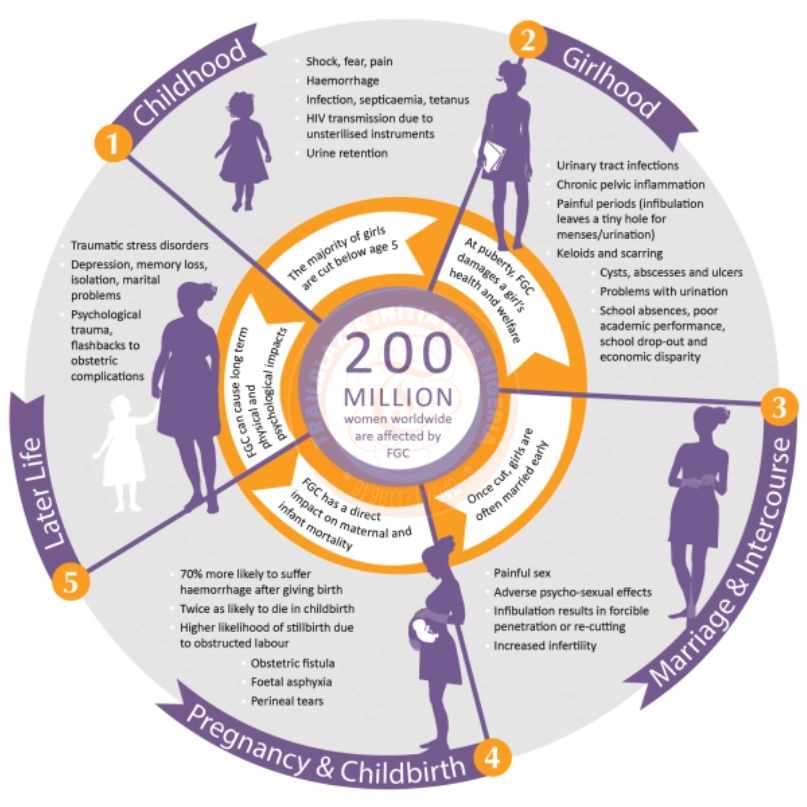
- Physical Health Risks
FGM is a harmful procedure that can cause immediate and long-term health complications, including:
- Severe pain and bleeding: The procedure is often performed without anesthesia, causing extreme pain and risk of hemorrhage.
- Infections: Non-sterile instruments can lead to tetanus, sepsis, and urinary tract infections, sometimes resulting in death.
- Complications in childbirth: Women who have undergone FGM are at higher risk of prolonged labor, cesarean sections, birth injuries, and infant mortality.
- Chronic health problems: Scarring, cysts, pelvic infections, painful menstruation, and difficulties with urination and sexual intercourse are common.
- Psychological and Emotional Harm
FGM is a traumatic experience for young girls and can have long-lasting psychological effects, such as:
- Post-traumatic stress disorder (PTSD): Nightmares, flashbacks, and anxiety following the procedure.
- Depression and low self-esteem: The practice can make girls feel ashamed, powerless, or devalued.
- Fear and distrust: It can strain relationships with parents, peers, and future spouses due to trauma and secrecy.
- Violation of Human Rights
FGM is recognized internationally as a violation of the rights of girls and women, including:
- The right to health: FGM exposes girls to serious health risks.
- The right to life and security: Complications can be life-threatening.
- The right to freedom from torture and cruel, inhuman treatment: FGM is non-consensual and physically harmful.
- The right to education and development: Girls undergoing FGM may miss school due to recovery or psychological effects.
- Social and Economic Consequences
FGM can also have broader social and economic impacts:
- Limiting opportunities: Health complications and early marriage linked to FGM can disrupt schooling.
- Medical costs: Treatment for complications places a financial burden on families and communities.
- Perpetuation of gender inequality: FGM reinforces harmful norms that devalue women and girls.
- FGM Does Not Improve Marriageability or Purity
A common justification for FGM is cultural or religious belief that it makes a girl “clean” or “marriageable.” Research shows this is false:
- FGM does not guarantee chastity or fidelity.
- The procedure is unnecessary for religious, health, or social reasons.
- Abandoning FGM protects girls while preserving their dignity, health, and future.