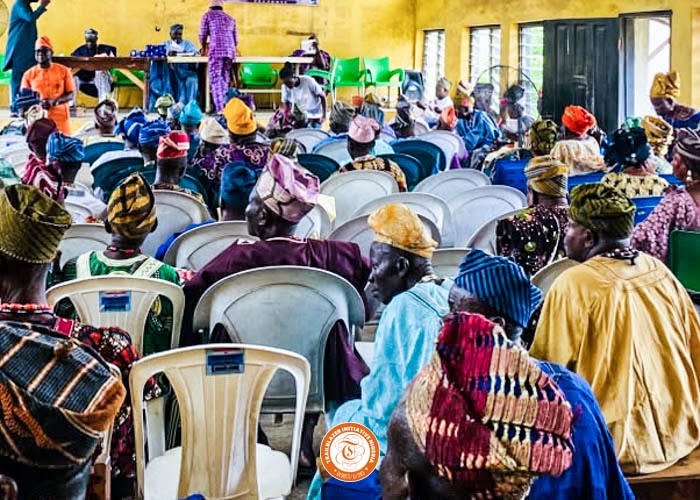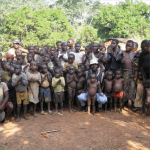
In a significant step towards accelerating the abandonment of Female Genital Mutilation (FGM) in Oyo State, Trailblazer Initiative Nigeria (TBI), with support from UNICEF Nigeria through the Oyo State Ministry of Women Affairs and Social Inclusion, successfully conducted a one-day orientation and inauguration of Male Engagement Alliance members drawn from male-led Community-Based Organizations (CBOs).
The event brought together men and boys from various communities to strengthen their understanding of positive masculinity, gender equality, and their roles as advocates and change agents in supporting efforts to eliminate FGM and other harmful gender practices.
Speaking on behalf of the Executive Director of Trailblazer Initiative Nigeria, Dr. Dare Olagoke-Adaramoye, Mrs. Aderiike Oyekola welcomed participants and expressed appreciation to UNICEF Nigeria, the Oyo State Government, and all stakeholders for their commitment to protecting the rights and wellbeing of girls and women. She noted that the orientation aimed to strengthen the capacity of male champions to challenge harmful social norms, promote gender-equitable attitudes, conduct reflective dialogue sessions, and mobilize communities towards the abandonment of FGM.
The meeting was attended by representatives of key government institutions, including Mrs. Adediran Oluwawemimo, representing the Honourable Commissioner for Women Affairs and Social Inclusion, and Mrs. Ayanniyi, representing the Director of Health Services, Egbeda Local Government.
In her remarks, Mrs. Adediran emphasized that FGM remains a violation of the rights of girls and women and called on men and boys to become active allies in promoting gender equality and protecting vulnerable children. She stressed that sustainable social change requires the involvement of both women and men in challenging harmful traditional practices.
Speaking on the health implications of FGM, Mrs. Ayanniyi highlighted the severe physical, psychological, and reproductive health consequences associated with the practice, including excessive bleeding, infections, childbirth complications, emotional trauma, and long-term health challenges. She urged participants to become advocates for prevention and early reporting of FGM-related risks.
Technical sessions focused on understanding FGM and harmful gender norms, positive masculinity, community advocacy strategies, safeguarding pathways, and the role of men and boys in supporting prevention and response efforts. Participants also developed community action plans and made public commitments under the Movement for Good to End FGM campaign.
The meeting culminated in the formal inauguration of the Male Engagement Alliance, creating a network of committed male champions who will lead community dialogues, advocacy activities, and behavior change initiatives aimed at ending FGM across intervention communities in Oyo State.